|  |
| Main Page |  |
Let's talk about some finishes for leather craft hardwareThere are many different types of finishes available. Here we will touch on a few of the most common ones, and explain how a color is not always the color you expect. | |
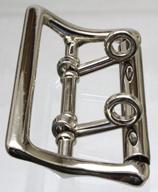
Some examples of the | PlatingNickelPlating is the process of putting a coating of one thing over another material. When nickel plating, in most cases (as it is with our products) is is done by electrolytic plating. The item (buckle, O-Ring, etc.) is first cleaned (chemically) of any oils or other unwanted "left-overs" from the manufacturing process. Then it is put in another chemical bath with positively charged nickel. A current is connected to the bath and the electricity causes the nickel ions to attach to the steel buckle (or whatever). Yes, it is a lot more complicated than that, but, quite frankly, we doubt you really care about the chemical and electrical reactions.After plating the finished product is given a chromium plating, as nickel will dull when exposed to air, while the chromium finish prevents that oxidation without taking anything away from the bright finish. The important part is that it gives the finished product a bright, shiny, durable finish that lasts for years.
|
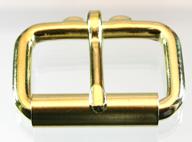 | BrassBrass plating is exactly (almost) the same process as nickel. The difference is that the product deposited is brass and not nickel (stating the obvious). Brass plating requires a finish coat, which is usually either clear lacquer or polyurethane. Some of our products use one, some the other. |
BlackOur black isn't plating at all. Let's, however, start with one type that is: Black Oxide Coating. First, we do not sell black oxide coated products. Black oxide is a dull drab finish and is more often used on internal car parts, rifles, screws and other purely industrial products. It is also less expensive to do than is powder coating. The process is similar to nickel and brass plating until you get to the actual application of "black". Instead of electricity the item is put in a tank of specialized blackening chemicals. When the desired effect is reached, they are washed, and then coated with a protective finish. This is the coating that often leads to someone getting something that simply doesn't look like what they wanted. When a company advertises "black", especially if they don't have a clear photo, look for black "oxide" or "oxidation finish" or "gunmetal black". All of these are ways of saying black oxide. If you like it - fantastic. If you're looking for a pretty bright piece, black oxide is not what you want. | |
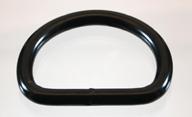 | Powder CoatingBlackWhile you can powder coat steel with just about any color, for our purposes we are talking about black. Our black products are powder coated in a shiny vibrant finish. It makes the finish product "classy" if you will, rather than "utilitarian" as would black oxide. Powder coating is (simplistically speaking) cleaning the piece of any oil or residue and abrading it (usually sand-blasting, but small parts are often tumbled in a fine abrasive). After that the products are suspended for coating. The process of coating first electrically grounds the rack that holds the part, then electrically charged powder is sprayed onto the part. The powder sticks to the part due to the electrical charge. After this point the powder is "melted" onto the part in a hot oven, resulting in a smooth and hard finish. This is the process used in all our black products. The finish is deep black, with a very definite sheen. |
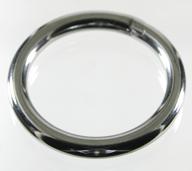 | Stainless SteelStainless steel isn't truly a finish, it is a "thing". Our stainless steel products are solid 304 stainless steel. There is no finish coat needed, it contains chromium as part of the steel itself (the same chromium that needed to be coated onto the nickel plated products) and that chromium mixed as part of the actual stainless steel provides the protection needed. Stainless steel has a bright finish, but not quite as shiny as nickel plated. While with good plating just about any decent piece of hardware can easily deal with getting wet, or in a damp place. Stainless steel will survive just about anyplace that a human being can. Being regularly submerged in water, even salt water, being up against a constantly damp product (or animal). It will take just about anything you can throw at it. Now a question we are often asked... Something to the effect of "I want to make dog collars, do I need to spend the money for stainless?" In most instances, no. I know of many people using our nickel, brass, or black hardware for all types of animal products with zero customer complaints. That doesn't mean, however, that it can't be a selling point. Hunting breeds, pups that live by the shore and go in the ocean - situations like that can often allow you to offer a premium product at a premium price point. There are very few people that don't know stainless steel really lasts. |
Other informational pages we hope you will find helpful: Explain the different D rings styles | |